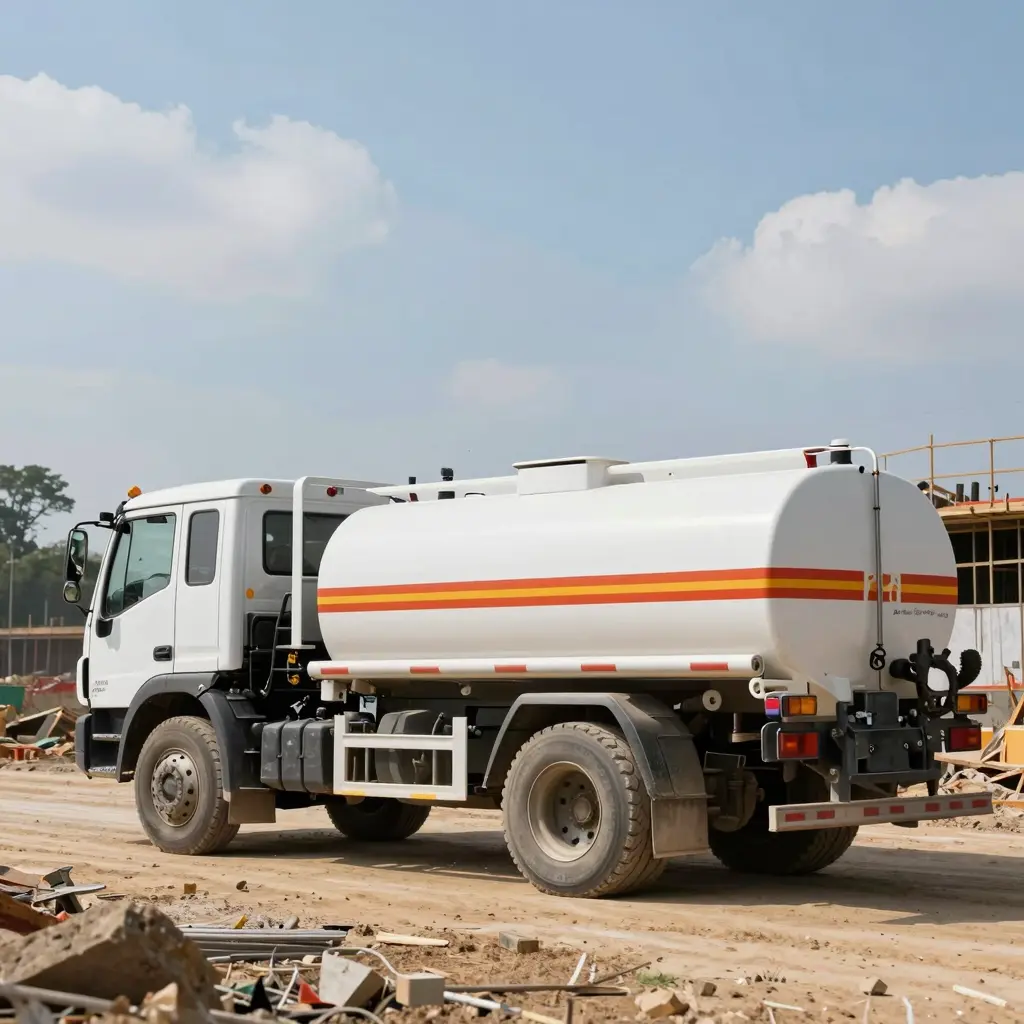

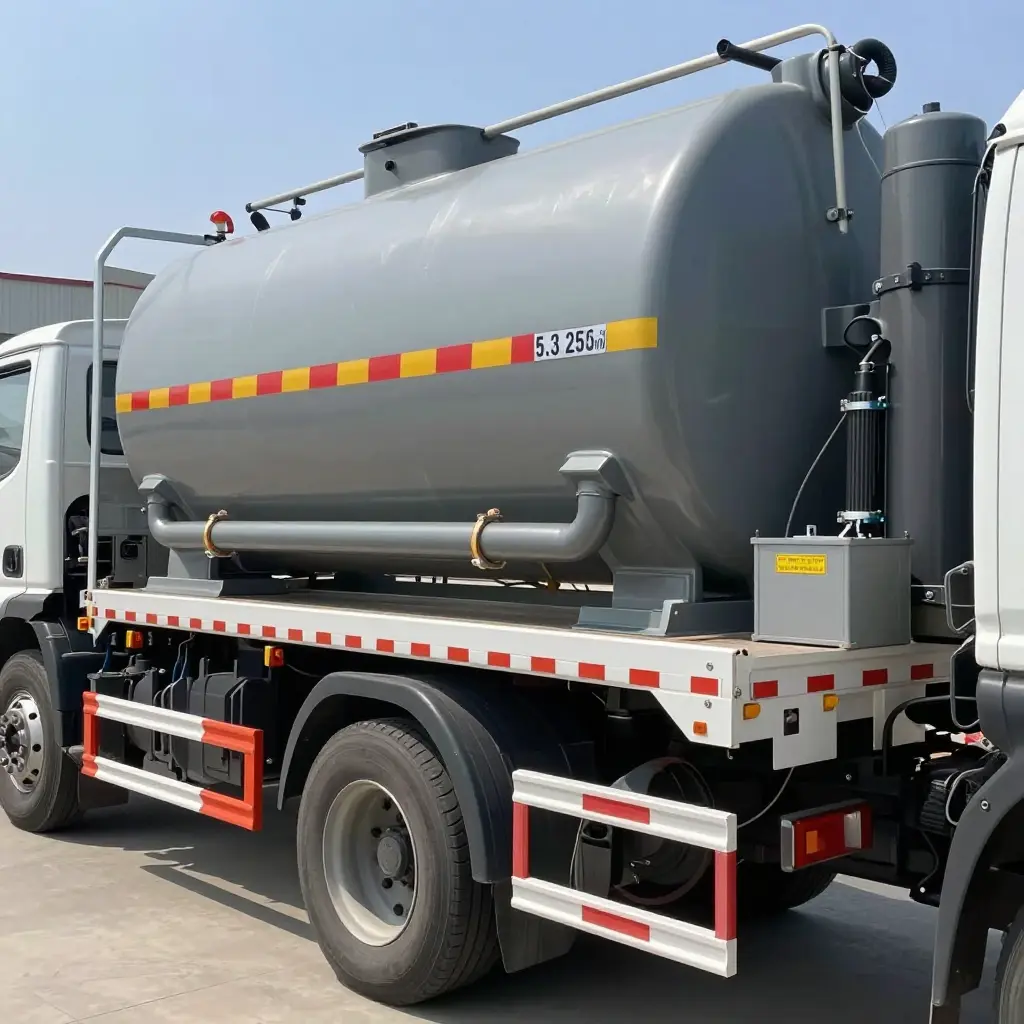
Why Pump-and-Baffle Rating Mismatch Matters
Septic tank delivery truck factory specifications often list a vacuum pump rating that does not match the tank baffle rating. Each number looks reasonable on its own. Mounted on the same chassis, though, the gap becomes a real operating problem: a pump sized for one vacuum and airflow can overwhelm baffles rated for a different flow and pressure envelope, or leave them doing far less than they could. This article looks at where that mismatch comes from, why it keeps showing up on factory spec sheets, and how buyers can reconcile the two numbers before the truck goes into service.
It is written for septic service companies, vacuum truck fleet operators and buyers, and procurement and specification engineers who evaluate pump and tank baffle configurations. Pricing and performance both depend on how these components are paired, so the relationship between pump type and tank size matters from the first line of a quotation.
Two terms need defining first:
- Vacuum pump – the rotary vane, liquid-ring, or lobe-type unit that generates suction to load, transport, and discharge liquid waste through the tank system.
- Tank baffle ratings – the structural and flow limits of the internal partitions that divide a tank into compartments, controlling surge and directing liquid during loading and unloading.
The section covers three things:
- How factory spec sheets set pump and baffle ratings independently, and why they diverge.
- What a genuine mismatch costs you in operation, safety, and warranty coverage.
- How to verify and reconcile both ratings before you buy, including a closer look at how pump type and tank size split the price.
Understanding Vacuum Pump Ratings on Septic Tank Delivery Trucks
When procurement engineers compare units, the vacuum pump is the component that separates a capable hauler from a sluggish one. But “big pump” is not a specification. A pump is defined by a cluster of interdependent ratings, and misreading any one of them distorts throughput, cycle times, and ultimately cost per gallon. Learning how those figures are published is the first step toward reading septic tank delivery truck factory specs critically.
The most visible rating is airflow, expressed in CFM (cubic feet per minute). CFM describes how quickly the pump moves air and, by extension, how fast it evacuates the headspace above the liquid in the tank. A high-CFM pump shortens evacuation time, but CFM alone says nothing about how deep a vacuum the pump can pull. That is what the maximum vacuum rating is for, quoted in inHg (inches of mercury) or mbar. This figure determines how effectively the pump lifts heavy, viscous sludge from deep or distant tanks.
Port sizing and drive architecture matter just as much. Inlet and outlet port size governs flow resistance and must match your hose diameter. The drive type shapes the performance envelope: rotary vane pumps deliver strong vacuum in a compact, lower-cost package; liquid ring pumps tolerate wet, corrosive vapor streams and run cooler; lobe (rotary piston) pumps push high CFM for rapid transfer. The duty rating then determines whether the pump is built for continuous operation or short intermittent bursts, which directly affects daily cycle counts.
The core rating parameters to verify on any spec sheet are:
- Airflow capacity in CFM – how fast air moves through the pump, driving evacuation speed.
- Maximum vacuum in inHg or mbar – how deep a vacuum the pump achieves, affecting lift height and sludge density.
- Inlet/outlet port size – the bore diameter that must align with hose and valve sizing to avoid restriction.
- Drive type and duty rating – rotary vane, liquid ring, or lobe construction, plus continuous versus intermittent service limits.
Read together, these numbers tell you whether the pump suits your tank volume and route density. A well-matched septic tank delivery truck configuration pairs pump ratings with tank baffling and hose sizing so the whole system performs, not just the pump on paper. Treat every rating as a system variable, and you avoid paying for advertised numbers the real work cannot use.
Quick Reference: What Each Rating Controls
| Rating | Unit | Primary Impact |
|---|---|---|
| Airflow capacity | CFM | Evacuation and transfer speed |
| Maximum vacuum | inHg / mbar | Lift height and sludge density |
| Port size | inches / mm | Flow resistance and hose matching |
| Drive type | rotary vane / liquid ring / lobe | Efficiency, durability, wet-vapor tolerance |
| Duty rating | continuous / intermittent | Daily cycle capacity |
When these values line up with how you actually operate, the pump helps you plan production instead of adding risk.
What Tank Baffle Ratings Actually Mean in a Factory Spec Sheet
Tank baffle ratings are the factory-defined limits that describe how a baffle is positioned, how much surge it can control, and how much structural pressure it can absorb before it deforms. They are not one number but a cluster of values engineers use to match a tank to a specific vacuum pump and duty cycle. Reading them correctly decides whether a truck hauls for a decade or cracks its welds in the first season.
Baffle Position and Tank Baffle Configuration
Baffle position defines where each partition sits along the barrel, usually expressed as a percentage of tank length or a fixed distance from the head. The overall tank baffle configuration describes how those partitions divide the interior into compartments. A typical septic tank uses one or two full baffles, but the exact spacing changes how liquid behaves during braking, acceleration, and cornering. Closer spacing controls slosh better; wider spacing leaves more usable capacity.
Surge Control and Load Stabilization
Every baffle rating carries a surge-control value: how much moving liquid momentum the plate can redirect. Without adequate surge control, a half-full tank throws thousands of pounds of shifting weight against the rear head, upsetting axle loading and braking balance. Baffles also stabilize the load itself, keeping a partially filled vacuum tank from building the rolling wave that destabilizes the chassis on grades and curves.
Structural Pressure Rating, Weld Integrity, and Corrosion Allowance
Factory specs list a structural pressure rating for each baffle, covering both positive internal pressure and the negative pressure a vacuum pump creates. Because vacuum loading pulls inward on the shell and baffle faces, engineers size baffles for vacuum stress as well as surge load. Weld specifications and corrosion allowance follow from that rating: throat thickness, full-penetration welds, and a sacrificial steel margin keep the baffle at its rated capacity after years of corrosive waste exposure. Buyers comparing bulk liquid transport tank design principles should check that the baffle rating matches the pump’s maximum vacuum, not just the tank’s nominal capacity.
A rating that looks generous on paper means nothing if the weld detail and corrosion allowance behind it cannot sustain the combined surge and vacuum forces over time.
The Core Mismatch: Peak Vacuum vs. Sustained Structural Load
On paper, the numbers line up neatly. A pump is rated to pull 28 inHg at the inlet, a tank baffle is rated to withstand 15 psi of differential pressure, and a procurement engineer checks both boxes. In the field, those two figures describe very different physical events, and the space between them is where a vacuum pump and tank baffle ratings mismatch starts cracking baffles, distorting tank ends, and triggering warranty disputes no spec sheet predicted.
Peak Vacuum Is a Moment, Not a Condition
Peak pump vacuum is transient and dynamic. It is the maximum suction the pump can generate at its inlet, and it usually occurs for a few seconds during initial pull-down, when the suction hose is partly blocked, or when the tank nears full and the liquid seal tightens. Because it is measured at a point and lasts only briefly, it says almost nothing about how much stress a flat internal plate can absorb over an eight-hour shift. A pump can spike to its maximum rating hundreds of times a day without ever holding that value long enough to matter to the pump itself, yet every spike loads the baffle.
Baffle Ratings Describe Sustained Load
A baffle is a flat divider, and the force it carries is pressure multiplied by area. A 15 psi rating across a two-by-three-foot baffle works out to roughly 13,000 pounds pushing on that plate. That is not a momentary spike; it is a load that persists for the whole fill cycle, then reverses during discharge. Baffles also fatigue. Repeated flexing weakens welds and stress concentrations long before a single peak event would fail them, so a rating expressed as one pressure number quietly ignores the cumulative damage that defines real service life.
Duty Cycle, Fluid Density, and Filling Rate Drive the Divergence
Three variables separate the two ratings in practice. Duty cycle matters because a truck running continuous municipal routes cycles far more often than one pumping single residential tanks, multiplying fatigue loading even when peak vacuum stays identical. Fluid density matters because heavy sludge and grease-laden septage resist flow, forcing the pump to hold deeper vacuum longer and driving sustained baffle pressure up. Filling rate matters because a fast fill from a large-bore hose can trap air and create localized pressure differentials that exceed the uniform conditions assumed in the baffle rating. Two trucks with matching nameplate numbers can behave completely differently on the job.
The comparison table below maps how each variable shifts peak pump vacuum and sustained baffle load on a typical septic tank delivery truck, so you can see where the specification gap opens up.
Table 1. Vacuum pump ratings versus tank baffle ratings on a septic tank delivery truck, with associated compatibility risks.
| Rating Parameter | Typical Pump Value | Typical Baffle Value | Compatibility Risk |
|---|---|---|---|
| Vacuum level (inHg) | 15-29 inHg, with 28 inHg as the common working setpoint | 0 inHg (atmospheric, not vacuum-rated) | High – unbraced baffles buckle or fatigue when the pump pulls full vacuum |
| Flow rate (CFM) | 200-1,000 CFM depending on lobe or rotary vane design | N/A (passive flow path, no rated throughput) | Medium – undersized baffle cutouts choke air movement and cap usable pump CFM |
| Structural pressure rating | 15-25 psi external collapse resistance | 3-5 psi hydrostatic load only | High – tank shells and baffles deform if stiffeners are not specified for vacuum service |
| Duty cycle | 50-100% continuous, load/unload every 10-30 minutes | Continuous static load, no cycling | Low – baffles see steady load, so cycling is rarely the failure driver |
| Port/opening size | 2-6 in inlet ports | 4-12 in baffle cutouts and weirs | Medium – mismatched sizing restricts airflow and traps liquid between compartments |
| Corrosion allowance | 0.06-0.12 in wall thickness typical | 0.06-0.25 in depending on media | Medium – dissimilar metals and aggressive waste drive galvanic and pitting corrosion |
Pump-to-Baffle Interface Diagram
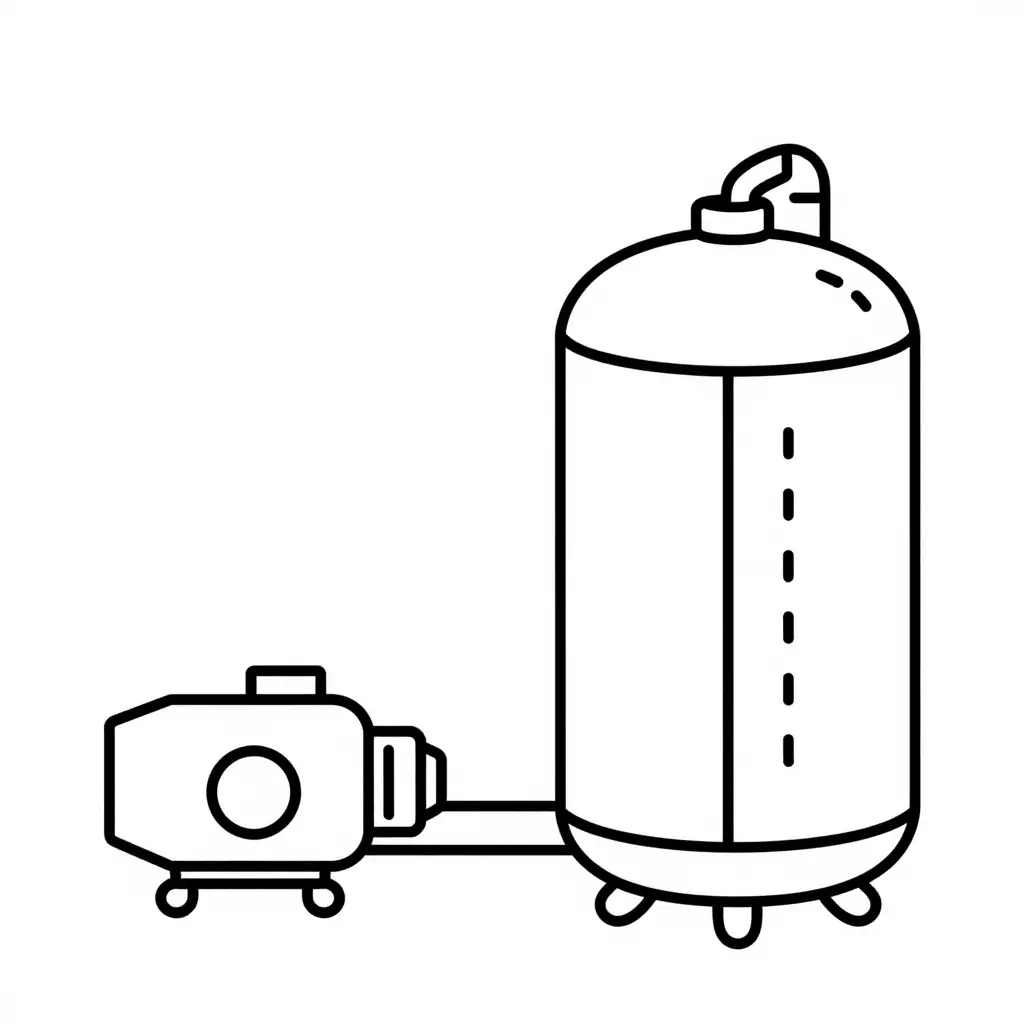
The schematic shows the physical relationship between the vacuum pump, the tank body, and the internal baffle plates. The pump sits outside the tank, and its inlet port connects through the tank top to the interior chamber. Baffle plates subdivide that interior, and their placement relative to the pump inlet affects how airflow, surging liquid, and vacuum load are distributed during operation.
When a pump’s rated airflow and the baffle layout are not matched, the interface becomes the failure point: liquid carryover, uneven pressure, or restricted vacuum paths can shorten pump life and stress the tank structure. This is the kind of pump-to-baffle specification mismatch that fleet buyers and upfitters need to verify before delivery. For how these configurations translate into real truck options, see our guide on septic tank delivery trucks for sale.
Mismatch Symptoms and Failure Indicators
When a vacuum pump’s rated airflow and vacuum curve do not align with the tank’s baffle rating, the mismatch rarely shows up as one dramatic failure. It surfaces as a cluster of nagging symptoms across the pump, the baffles, the tank shell, and the truck’s ride. Catching them early on a septic tank delivery truck keeps a specification error from becoming a roadside breakdown or a cracked, out-of-service tank.
- Baffle fatigue cracks – hairline fractures that radiate outward from baffle mounting points, often appearing first where the baffle meets the tank shell and gradually lengthening with every load cycle.
- Weld seam stress – discoloration, weeping pinholes, or visible stress lines along baffle-to-shell welds, signaling that repeated flexing is exceeding the joint’s designed tolerance.
- Reduced suction performance at higher fill levels – a pump that pulls strongly when the tank is empty but noticeably loses lift and flow as the level rises, a classic sign the baffle rating is throttling the pump’s curve.
- Tank wall deformation – bulging or “oil-canning” of the sidewalls near baffle attachment zones, indicating the shell is absorbing pressure it was never rated to take.
- Premature pump seal wear – seals, vanes, and bearings failing well before their rated service interval because the pump keeps operating outside its matched envelope.
- Load-shift instability during transport – sloshing that overruns the baffle’s damping design, producing sway, weight transfer, and uneasy handling through turns or on grades.
- Abnormal vacuum cycling and vibration – a fluttering gauge needle, surging flow, or a low-frequency resonance that appears only when the tank is partially full.
If you are comparing configurations before purchase, review the septic tank delivery truck specifications that pair pump curves with baffle ratings correctly.
These symptoms often go unnoticed because they develop gradually and blend into normal wear. Operators attribute a weak seal or a soft ride to age rather than a rating conflict. Without cross-checking the pump curve against factory specs for baffle capacity, the true cause stays hidden until a weld finally fails under load.
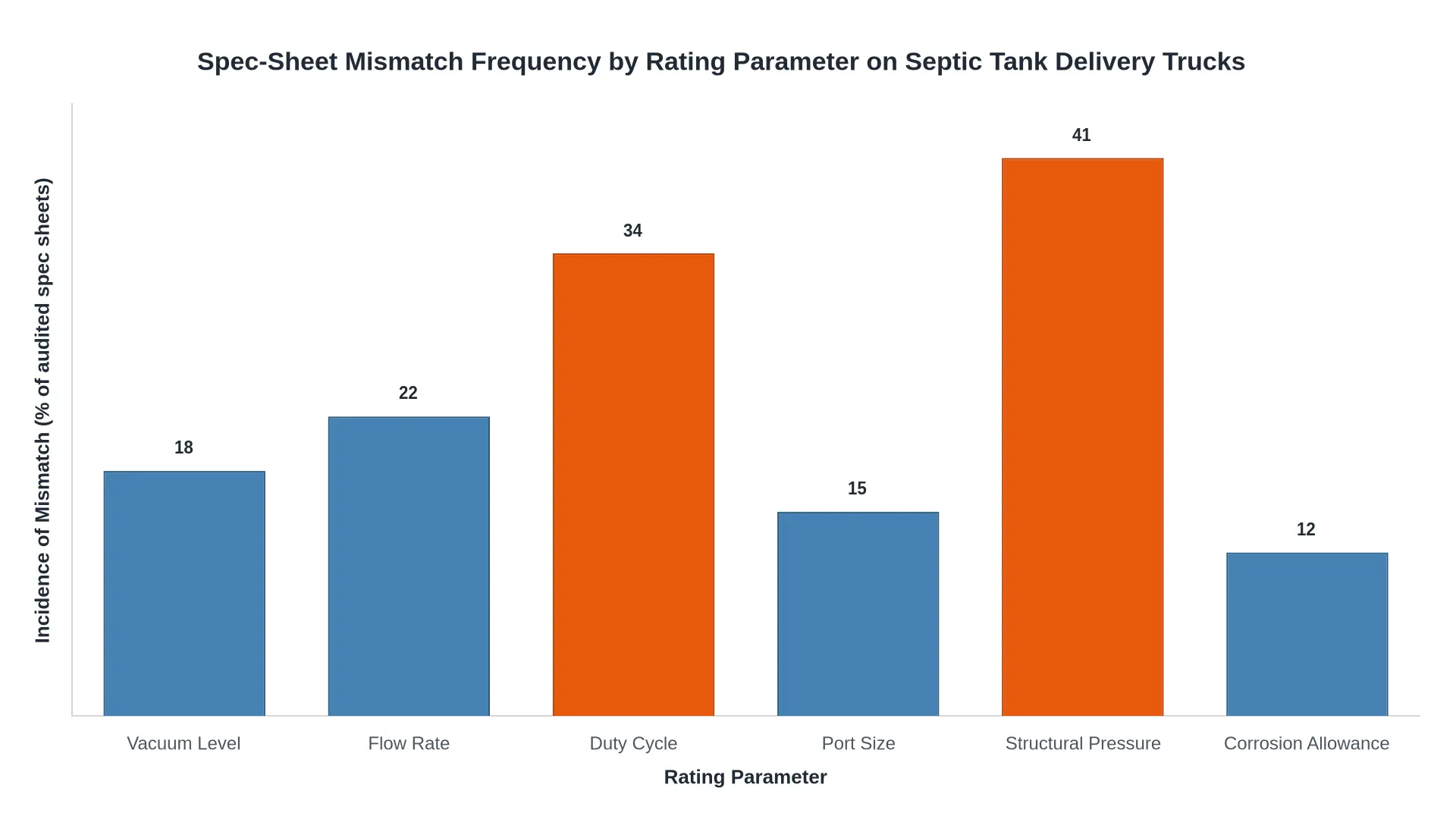
Figure: Structural Pressure (41%) and Duty Cycle (34%) show the highest mismatch incidence of all six rating parameters audited on septic tank delivery trucks.
Root-Cause Analysis: Why Vacuum Pump and Tank Baffle Ratings Drift Apart
The mismatch between vacuum pump and tank baffle ratings seldom comes from one defective decision; it accumulates through fragmented engineering. In most upfit workflows, the pump and the tank come from different vendors with different design cultures. Each component is then rated against its own governing standard: pumps to a displacement or vacuum-level benchmark, baffles to a structural or pressure-cycle standard. Because no single authority reconciles the two frameworks, a truck can ship with a pump that pulls harder than the baffle was ever engineered to tolerate, or a baffled tank far stiffer than its pump can use. The configuration looks defensible on paper precisely because the numbers never share a common yardstick.
Marketing pressure makes it worse. Headline specs are written to win the spec-sheet battle, so factories advertise peak vacuum and nominal tank volume rather than the sustained performance a fleet actually gets. A “rated” figure reflects aspiration more than verifiable operation. Without an integrated verification step, a test that runs the pump and baffle together under real load and real duty cycles, those divergent claims go unchallenged until field failures, cracked baffles, or sluggish cycle times expose the gap.
The fix is practical. Treat performance targets as one integrated specification, verify pump and baffle behavior together before sign-off, and align procurement around shared duty cycles rather than isolated component maxima. Buyers weighing how pump and tank choices affect total cost of ownership can compare configurations before committing capital and avoid paying twice for mismatched capacity. Treat the mismatch as a systems problem rather than a parts problem, and a recurring spec conflict becomes a manageable engineering decision.
The Five-Step Spec Verification Flow
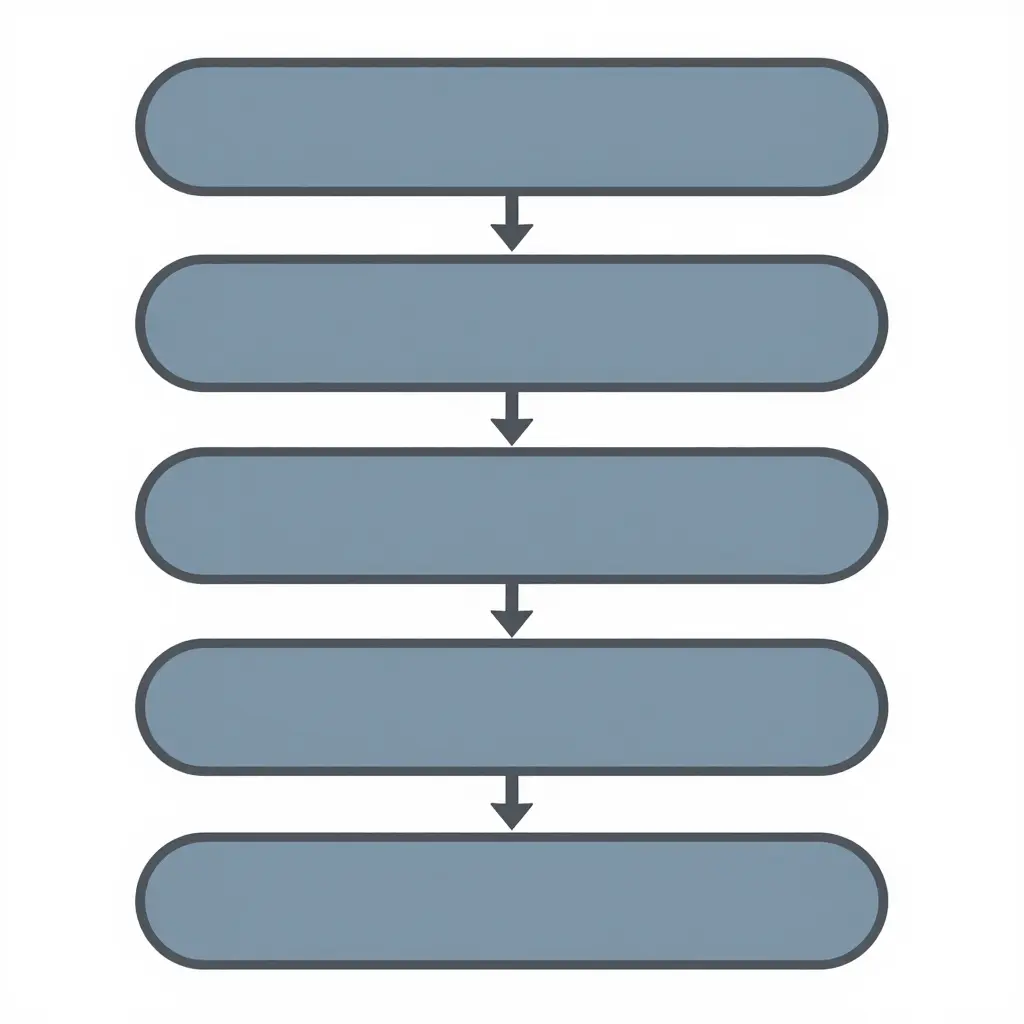
Before you approve a septic tank delivery truck build, one quiet failure point hides inside the spec sheet: a vacuum pump rated to one pressure class bolted to a tank baffle engineered for another. The flowchart below distills the pre-purchase verification sequence into five checkpoints your procurement and upfit teams can trace at a glance.
Reading the Sequence
The diagram stays deliberately abstract, so here is how each box maps to a real purchasing action:
- Collect Factory Specs – Pull the manufacturer datasheets for the vacuum pump, tank shell, and internal baffle assembly, including rated working pressure, vacuum level, and material thickness.
- Cross-Check Rating Parameters – Line up the pump’s pressure and vacuum ratings against the baffle’s structural rating; mismatches usually appear right here.
- Confirm Structural Pressure Match – Verify that the tank shell and baffle can withstand the maximum differential the pump can generate, including surge conditions.
- Verify Duty Cycle Fit – Confirm the pump’s continuous duty rating and baffle fatigue life align with your real hauling schedule, not just peak output.
- Approve Configuration – Sign off only once every upstream checkpoint agrees, then lock the validated pump-and-baffle pairing into the build order.
| Step | Verification Checkpoint | What to Confirm |
|---|---|---|
| 1 | Collect Factory Specs | Pump, shell, and baffle datasheets with rated pressure and vacuum figures |
| 2 | Cross-Check Rating Parameters | Pump ratings aligned with baffle structural ratings |
| 3 | Confirm Structural Pressure Match | Tank and baffle tolerate maximum pump differential |
| 4 | Verify Duty Cycle Fit | Continuous duty and fatigue life match the hauling schedule |
| 5 | Approve Configuration | All checkpoints agree before the build order is locked |
Working through this order prevents the costliest outcome: a truck delivered with components that are each individually rated, yet never rated for one another. For a closer look at how tank size and vacuum pump type divide the total price, review these septic tank truck cost breakdowns.
Specification Guidance and Solutions
Matching vacuum pump performance to tank baffle ratings starts with one discipline: compare components on the same basis. Pump curves are usually published at free air displacement (CFM) and maximum vacuum (inHg or mbar), while tank baffle ratings are documented as structural pressure limits, weld fatigue thresholds, and surge-load tolerances. If procurement reads the two documents side by side without reconciling units, materials, and test conditions, a mismatch hides in plain sight until the first high-vacuum cycle cracks a baffle weld.
Start by requesting the integrated factory spec package, not the marketing datasheet. A genuine integrated package ties the pump’s duty cycle to the baffle plate thickness, gusset spacing, and shell reinforcement documented for that exact tank. When those documents are produced together, the pump cannot out-pull the baffle, and the baffle cannot bottleneck the pump.
For sourcing, confirm the dealer can supply a build sheet listing pump model, baffle material grade, and pressure-test results on one document. Buyers reviewing regional suppliers often benchmark against a septic tank truck for sale in MD to see how a compliant spec stack should read, and they compare negotiating leverage across tank truck companies in Alberta when dealer evaluation hinges on factory traceability.
Specification Best Practices
- Require a single integrated factory spec sheet linking pump CFM, baffle pressure rating, and weld test data on the same document number.
- Specify a tolerance band of no more than 10% variance between the pump’s rated vacuum draw and the baffle’s certified pressure limit.
- Demand material certificates (plate grade and thickness) for every baffle, with mill traceability available on request.
- Insist on documented hydrostatic and vacuum-cycle test results before acceptance, signed by the upfitter’s quality engineer.
Apply these standards early in the RFQ, and the pump and baffle stay matched for the life of the fleet.
Pre-Purchase Factory Spec Verification Checklist
| Spec Item | What to Verify | Acceptable Range |
|---|---|---|
| Vacuum Pump Max Vacuum | Match pump nameplate rating against factory datasheet | 85-95% vacuum (approx. -25 to -28 inHg at sea level) |
| Pump Flow Rate | Confirm rated discharge flow at operating vacuum against the spec sheet | 200-1,100 CFM, depending on pump model class |
| Baffle Structural Pressure | Check baffle pressure rating from the design/weld certificate | Withstand minimum 1.5x maximum operating tank pressure |
| Duty Cycle | Confirm continuous vs. intermittent rating for planned daily cycles | 80-100% continuous duty for fleet/industrial use |
| Baffle Weld/Corrosion Rating | Inspect weld procedure and material corrosion allowance spec | Full-penetration welds; corrosion allowance consistent with tank material |
Frequently Asked Questions
Why are the pump and tank baffle specs rated separately?
Vacuum pump ratings describe airflow capacity and pressure limits; baffle ratings define the structural load an internal partition can withstand. The two systems are engineered by different disciplines and validated against different test criteria, so the factory assigns each its own specification envelope instead of one combined value. That separation is why a vacuum pump and tank baffle ratings mismatch can go unnoticed until the unit runs at full load.
How can you tell if a mismatch exists?
A mismatch usually surfaces when the pump’s rated airflow or vacuum level exceeds the deflection tolerance of the baffles under surge conditions. Technicians confirm it by cross-referencing the pump’s CFM and maximum vacuum ratings against the baffle’s rated pressure differential and weld specification. Any gap between those numbers signals a vacuum pump and tank baffle ratings mismatch to resolve before the truck enters service.
Does a higher pump rating always mean better performance?
No. A higher-rated pump only helps when the tank, baffles, and discharge piping can handle the extra airflow and pressure differential. An oversized pump pushing against under-rated baffles causes flexing, weld fatigue, and premature cracking rather than faster cycle times. The goal is a balanced system, not the largest number on the data sheet.
How does baffle count affect compatibility?
More baffles divide the tank into smaller compartments, which reduces slosh but concentrates pressure on each partition during rapid fill or discharge. Fewer baffles spread the load differently and may allow more liquid movement, which raises dynamic stress on the pump’s seals and valves. Matching baffle count to the pump’s rated flow keeps both components within their design limits.
What information should you request from a factory when buying a septic tank delivery truck?
Ask for the pump’s CFM rating, maximum vacuum and pressure limits, the baffle pressure-differential rating, baffle count and spacing, weld specifications, and the tank’s ASME or equivalent certification. Also request surge-load test data and the manufacturer’s recommended pump-to-tank pairing matrix. Before finalizing an order, review this factory documentation for the septic tank delivery trucks for sale you are considering; comparing the records side by side is the fastest way to spot an incompatible build.
Conclusion: Treat Pump and Baffle Ratings as One Integrated Specification
Vacuum pump ratings and tank baffle ratings are not two independent numbers to shop for separately. They are one integrated specification. A pump that outpaces what the baffles and tank geometry can safely handle creates dynamic surge loads, structural fatigue, and premature failure; a tank rated for more baffle pressure than the pump can generate simply underperforms its cost. The spec only works when both figures are engineered, verified, and documented together.
For procurement, the takeaway is the same. Do not base decisions on isolated data points pulled from a sales sheet. Demand verified integrated factory specifications that confirm pump capacity, baffle pressure rating, and tank volume as one matched system. That is what protects uptime, safety, and total cost of ownership over the fleet’s service life.
- Confirm that the vacuum pump’s rated airflow and the baffle pressure rating are documented as a matched pair on the factory spec sheet, not as separate figures.
- Verify tank volume against actual operating needs, since capacity directly affects cycle count and hauling efficiency – see this guide to how many gallons a commercial tanker truck can hold for realistic benchmarks.
- Require integrated verification at the factory before delivery, so mismatched pump-and-baffle configurations never enter service.
For septic service companies and vacuum truck fleet operators, this integrated approach is not a technicality. It is the difference between reliable daily performance and recurring downtime. Specify the pump and baffle together, verify them together, and the truck holds up in daily service.