
In the competitive landscape of modern business, understanding the intricacies of your logistics is crucial, especially when it comes to the capabilities of a commercial tanker truck. These vehicles are not merely tools for transportation; they are pivotal to the efficiency of operations in industries ranging from fuel distribution to food processing. The capacity of a commercial tanker truck can vary significantly, typically holding between 5,000 to 11,600 gallons, depending on its type and design. This capacity directly impacts your operational efficiency, regulations compliance, and cost-effectiveness. Improving your understanding of these capacities can lead to better route planning, optimized loads, and ultimately, increased profit margins. By assessing the appropriate tanker capacities for your specific business needs, you can make more informed decisions that enhance your supply chain operations. Learn more about the versatile solutions tankers offer for bulk transportation and ensure your business thrives in an ever-evolving market.
Common Types of Commercial Tanker Trucks
Commercial tanker trucks are essential for transporting various types of liquids and gases used in different industries. Here’s a rundown of common types of tanker trucks, their capacities, and typical uses:
-
Petroleum Tankers
-
Capacity: 5,000 to 11,600 gallons (19,000 to 44,000 liters)
-
Uses: Transportation of gasoline, diesel, and other petroleum products. They are vital in the fuel supply chain and often service gas stations and industrial locations.
-
Chemical Tankers
-
Capacity: 5,000 to 10,000 gallons (19,000 to 38,000 liters)
-
Uses: Designed to transport a variety of industrial chemicals and hazardous materials. Their design includes special safety features to prevent leaks and ensure safe transit of dangerous goods.
-
Food Grade Tankers
-
Capacity: 6,000 to 8,000 gallons (23,000 to 30,000 liters)
-
Uses: Primarily used for carrying food products, like milk, juice, and other consumables, ensuring that hygiene standards are adhered to during transportation.
-
Cryogenic Tankers
-
Capacity: Varies widely based on the product and design
-
Uses: Transporting liquefied gases such as LNG (Liquefied Natural Gas). These tankers are insulated to maintain the low temperatures required for liquefaction.
-
Water Tankers
-
Capacity: 1,000 to 6,000 gallons (3,800 to 22,700 liters)
-
Uses: Commonly used by various industries for transporting potable water, firefighting purposes, or dust control in construction.
Understanding the different types of commercial tanker trucks and their typical applications can help business owners make informed decisions when selecting the right trucks for their operations. For more details on fuel tank capabilities, learn more about fuel tank trucks.
Additionally, if you are interested in water transport solutions, check out this resource on water tank trucks.
This overview assists in understanding the range of vehicles available for specific needs within various industries, supporting efficient logistics and operational success.
Standards and Regulations on Commercial Tanker Truck Capacities
Tanker trucks play a crucial role in the transportation of liquids across various industries. They are regulated by different standards and regulations that dictate their capacities. Understanding these standards is essential for business owners seeking to optimize logistics and meet compliance requirements.
Capacity Overview
Capacity for commercial tanker trucks can vary significantly based on the type of liquid being transported and local regulations.
- Heavy-duty Tankers: Commonly, these can hold between 5,000 to 11,600 gallons (approximately 19,000 to 44,000 liters). Some specialized designs can even accommodate more.
- Larger Tankers: Maximum limits often reach around 43,910 liters (or 11,588 gallons) in the U.S., mainly due to weight allowances on roadways.
- Smaller Tankers: Typically designed for lighter loads, they might hold around 1,000 to 3,000 gallons (3,800 to 11,400 liters).
Regulatory Standards
The Federal Motor Carrier Safety Administration (FMCSA) sets safety regulations ensuring that tanker trucks are designed and operated within their capacity limits. These regulations emphasize not only the load capacity but also the types of materials that can be transported safely.
Moreover, state regulations may introduce additional capacity restrictions that vary regionally. It’s essential for businesses to be aware of their local laws to ensure compliance and safety.
For more comprehensive insights into the versatility of tank trucks, explore this article.
Conclusion
Understanding the standards and regulations surrounding tanker truck capacities is vital for fleet management and operational efficiency. Proper adherence to these regulations not only ensures safety but also enhances the overall efficiency of liquid transportation.
References:
- FleetOwner. Everything you need to know about tanker trucks
- Wondee. How Much Gas Does a Tanker Truck Hold?
- Work Truck Maker. Tanker Truck Guide: Safety, Types, and Capacities
- Sinotruk Overseas. Fuel Tank Truck Capacity – Real Numbers, Real Limits
| Truck Type | Capacity (Gallons) | Common Uses |
|---|---|---|
| Fuel Tankers | 5,000 – 11,600 | Transporting gasoline, diesel |
| Chemical Tankers | Variable | Carrying hazardous and non-hazardous chemicals |
| Milk Tankers | 1,500 – 2,000 | Transporting milk from farms |
| Water Tankers | 3,000 – 6,000 | Delivering fresh water |
Overview of Commercial Tanker Truck Capacities
- Commercial tanker trucks serve diverse purposes in various industries.
- Typical capacities range significantly based on the type of truck, with fuel tankers holding the highest volumes.
Why Choose the Right Tanker?
Selecting the appropriate tanker truck is crucial for operational efficiency, compliance with safety regulations, and meeting the specific needs of your business. To understand more about the versatility and reliability of tankers, learn more about this solution in bulk liquid transportation.
Knowing the capacity and common uses will help business owners make an informed decision about which type of tanker truck best fits their logistics needs and compliance requirements.
Factors Affecting Tanker Capacity
When considering the capacity of commercial tanker trucks, several key factors come into play. Understanding these can significantly influence operational efficiency and adherence to regulations. Here are the primary factors:
Design
The design of a tanker truck directly impacts its capacity. Engineers consider various factors in tanker design:
- Shape and Structure: The tank’s shape affects how liquid is stored and distributed. Cylindrical shapes are common because they offer optimal strength and minimize stress concentrations.
- Load Distribution: Proper weight distribution is critical to maintaining vehicle stability. Tankers must be designed to ensure that load does not exceed the axle weight limits as defined by transport regulations.
Materials
The choice of materials is essential for ensuring the tanker can safely and efficiently transport liquids:
- Strength-to-Weight Ratio: Materials such as aluminum, stainless steel, and carbon steel are used due to their favorable strength-to-weight ratios. Lighter materials allow for greater capacity within the legal weight limits for trucks.
- Corrosion Resistance: Tanker trucks often carry corrosive substances. Therefore, using materials that resist corrosion extends the lifespan of the tanker and ensures safety during transport.
Regulations
Various regulatory frameworks govern tanker truck capacities and the materials used:
- Federal and State Regulations: In the United States, agencies such as the EPA and DOT provide guidelines that affect tank design, maximum load capacity, and the types of materials that are permissible for construction.
- Capacity Limits: Regulations establish maximum capacities for different types of cargo. For example, liquid bulk transportation is subject to strict weight limits that vary based on the liquid’s specific gravity and potential hazards. These regulations help maintain safety standards for road transport.
Conclusion
By understanding these factors-design, materials, and regulations-business owners can make informed choices about tanker trucks, ensuring compliance and efficiency. For more on the comprehensive capabilities of tank trucks, you can learn more about reliable and versatile solutions for bulk liquid transportation. Additionally, being aware of the capacity regulations specific to your industry can aid in optimizing operational strategies.
Typical Capacities of Commercial Tanker Trucks
Understanding the typical capacities of various types of commercial tanker trucks is essential for business owners involved in transportation. These capacities can greatly influence logistics, efficiency, and operational costs. Below is a chart illustrating the typical capacities of different categories of tanker trucks:
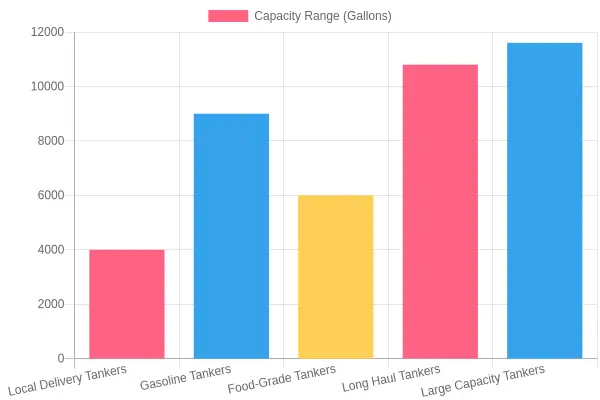
Tanker Truck Capacity Chart
| Category | Capacity Range (Gallons) |
|---|---|
| Local Delivery Tankers | 3000 – 5000 |
| Gasoline Tankers | 8000 – 10000 |
| Food-Grade Tankers | 5000 – 7000 |
| Long Haul Tankers | 10000 – 11600 |
| Large Capacity Tankers | Over 11600 |
This chart provides a quick reference to determine which tanker suits your transportation needs. For more insights into tank truck specifications, learn more about tank trucks.
Real-World Examples of Businesses Using Tanker Trucks
1. Oil and Gas Industry: ExxonMobil
ExxonMobil is one of the largest oil and gas companies in the world, employing a vast fleet of tanker trucks to transport petroleum products. The company utilizes these trucks to deliver gasoline, diesel, and other refined products to distribution centers and gas stations across the globe. For ExxonMobil, understanding the capacity of their tanker trucks is crucial to optimizing routes and ensuring on-time deliveries. Typically, their tanker trucks can hold between 8,000 to 10,000 gallons, allowing them to maximize the quantity of fuel transported while adhering to safety regulations and weight limits. The effective use of tanker trucks contributes significantly to their supply chain efficiency, enabling them to better serve their customers and manage demand fluctuations.
2. Dairy Industry: Nestlé
Nestlé, a leading name in the food and beverage sector, heavily relies on specialized tanker trucks to transport milk from farms to processing facilities. These refrigerated tankers are designed to maintain optimal temperature control to ensure the quality of the milk during transit. Nestlé’s tanker trucks typically have a capacity ranging from 5,000 to 10,000 gallons. Understanding and managing this capacity is vital for Nestlé to streamline operations, ensuring timely deliveries without compromising product safety. Their ability to efficiently transport large volumes of milk helps maintain a consistent supply to meet consumer demand.
3. Chemical Manufacturing: Dow Chemical
Dow Chemical, a major player in the chemical industry, utilizes tanker trucks to transport a variety of chemicals from manufacturing sites to distribution points and clients across different regions. Dow’s tanker fleet includes specialized vehicles capable of carrying hazardous materials with capacities that can exceed 10,000 gallons. For Dow, precise knowledge of tank capacity is essential for compliance with safety regulations as well as for planning effective logistics. By optimizing their tanker’s capacity utilization, Dow can reliably deliver products while minimizing operational costs.
Conclusion
Understanding the capacity of commercial tanker trucks is a crucial aspect of operations for many businesses. Whether in the oil and gas, dairy, or chemical industries, the ability to strategically manage tanker truck fleets can lead to enhanced operational efficiencies and improved service delivery. For more insights on how tanker trucks can be leveraged in business operations, learn more about good delivery practices and explore the impact of fuel tank capacity.
Tanker truck capacities play a significant role in the logistics and transportation sectors, impacting operational efficiency and cost-effectiveness. As noted in various industry analyses, “In transportation, larger tanker capacities allow companies to maximize their cargo loads, thereby reducing the number of trips required and cutting fuel costs.”
“Larger capacities not only increase efficiency but also help minimize the environmental impact by decreasing the overall carbon footprint of transportation.” – Industry Expert
This statement underlines that when businesses can transport large volumes in fewer trips, they can achieve not only greater profitability but also enhance their sustainability efforts. For business owners in the transportation sector, understanding these dynamics can make a pivotal difference in operational strategy.
For more insights about tank trucks being a reliable solution for bulk liquid transportation, you may learn more here.
In conclusion, selecting the appropriate tanker truck size is essential for optimizing operations and reducing costs in commercial transportation. Properly sized equipment leads to better logistics planning and management.
Conclusion
Understanding the capacities of commercial tanker trucks is vital for business owners involved in logistics and transportation. Accurate knowledge of these capacities not only ensures operational efficiency but also aids in strategic planning, compliance with regulations, and financial management. Here are some key takeaways:
- Cost Efficiency: Optimizing load capacities minimizes the number of trips necessary, directly impacting fuel and labor costs.
- Regulatory Compliance: Recognizing the legal limits concerning weight and volume can help prevent costly fines and operational delays.
- Operational Planning: Accurate capacity forecasts enable better resource allocation and scheduling, enhancing customer satisfaction and timely deliveries.
- Risk Management: Proper understanding prevents overload situations, reducing the risk of accidents and product damage, which can jeopardize your business reputation.
Understanding these aspects empowers business owners to make informed decisions that can lead to significant savings and improved service delivery. If you are looking for more detailed information about how tanker truck capacities can benefit your business directly, do not hesitate to contact us. Our team is ready to assist you with any inquiries and help you select the right tanker solutions tailored to your needs.
Let’s improve your business operations today!
FAQs About Commercial Tanker Trucks
1. What is a commercial tanker truck?
Commercial tanker trucks, also known as tank trucks, are specialized vehicles designed to transport liquids or gases in bulk. They are commonly used in various industries, including fuel distribution, chemical transport, and food and beverage delivery. Their design allows for the safe and efficient transport of materials ranging from water and fuel to hazardous chemicals.
2. How many gallons can a commercial tanker truck hold?
The capacity of commercial tanker trucks varies significantly based on their design and purpose:
- Fuel Tankers: Typically hold between 5,000 to 11,600 gallons (about 19,000 to 44,000 liters).
- Water Tankers: Generally have capacities of 1,000 to 4,000 gallons (approximately 3,800 to 15,000 liters).
- Chemical Tankers: Can transport between 5,000 to 6,000 gallons (approximately 19,000 to 23,000 liters).
- Milk Tankers: Usually carry 4,000 to 6,000 gallons (approximately 15,000 to 23,000 liters).
If you’re interested in the specifics of a particular type, consider checking this article about fuel tank capacities.
3. What types of liquids are typically transported in tanker trucks?
Tanker trucks are used to transport a variety of liquids, including:
- Petroleum Products: Gasoline, diesel, and jet fuel.
- Chemicals: Both hazardous (like acids) and non-hazardous liquids.
- Food Products: Such as milk and juices.
- Water: For drinking, irrigation, and industrial uses.
4. What are the important safety features of tanker trucks?
Safety is a major concern for tanker trucks due to the nature of their cargo. Key safety features include:
- Anti-lock braking systems (ABS) to prevent wheel lockup during emergency braking.
- Baffled tanks to reduce the sloshing effect of liquids, which can affect handling.
- Emergency shut-off valves to quickly contain leaks if they occur.
- GPS tracking for real-time location monitoring, enhancing security and response times in emergencies.
5. How do I choose the right tanker truck for my business?
When selecting a commercial tanker truck, consider the following factors:
- Type of Cargo: Determine the type of liquids or gases you’ll be transporting.
- Capacity Needs: Assess how much volume you need to carry to meet your business demands.
- Regulatory Requirements: Ensure the tanker complies with any industry regulations for transporting specific materials.
- Budget: Evaluate your financial plan for purchasing, running, and maintaining the vehicle.
You can also read more about the different types of tank trucks in this tanker truck overview article.
6. Are there any specialized tanker trucks?
Yes, there are a variety of specialized tanker trucks tailored to unique industry needs:
- LPG Tankers: Designed for transporting liquefied petroleum gas.
- Sand Tankers: Used to carry sand or other granular bulk materials in liquid movements.
- Septic Tank Trucks: Designed specifically for the vacuuming and transportation of sewage or waste materials.
For details on septic tank trucks, see our article about septic tank delivery trucks for sale.
7. What maintenance is required for tanker trucks?
Regular maintenance is essential to ensure the safe operation of tanker trucks. This includes:
- Routine Inspections: Checking for leaks and structural integrity.
- Brake and Tire Maintenance: Ensuring braking systems are operational and tires are in good condition.
- Cleaning: Regularly cleaning the tank to avoid contamination, especially important for food and chemical transport.
- Regular Oil Changes: Following the manufacturer’s recommendations for maintenance and oil change intervals.
Conclusion
Understanding the nuances of commercial tanker trucks, their capacities, and their usage is crucial for business owners looking to optimize their transport logistics. By familiarizing yourself with these frequently asked questions, you can make informed decisions about which tanker truck fits best for your commercial needs.